
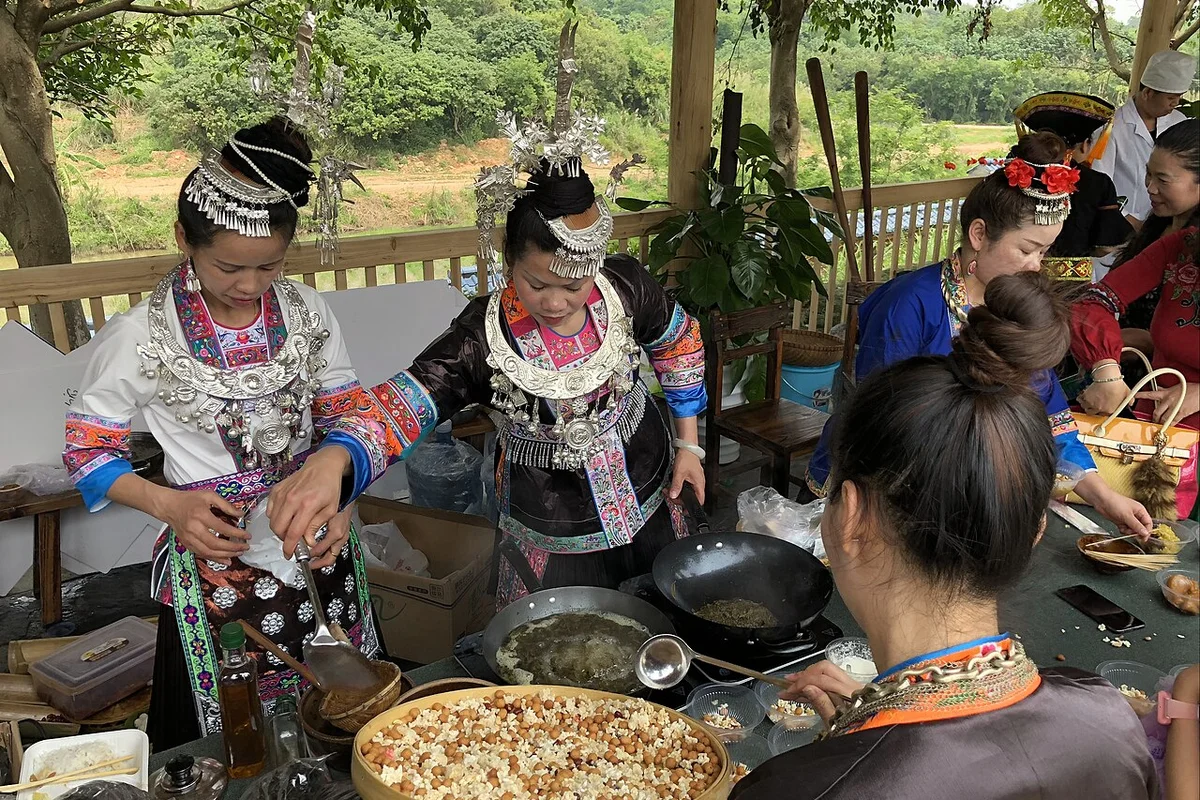
If your idea of Chinese tea is a tranquil porcelain gaiwan filled with delicate, floral green tea sipped in contemplative silence, Guilin’s Oil Tea (油茶, Youcha) will shatter every single preconception.
Oil tea is loud. It is savory, peppery, intensely caffeinated, and served scalding hot. It is brewed not with teapots, but with rhythmic wooden mallets pounding raw ginger, crushed garlic, and camellia seed oil in smoking cast-iron cauldrons.
Often dubbed “The Karst Espresso” by intrigued Western gastronomes, Gongcheng Oil Tea was officially inscribed onto UNESCO’s Representative List of the Intangible Cultural Heritage of Humanity in 2022. For the Yao, Dong, and Han peoples of Guangxi, it is not merely breakfast—it is daily medicine, social adhesive, and an ancient survival strategy against mountain dampness.
1. What is Oil Tea? The Savory Elixir of Longevity
Gongcheng Yao Autonomous County (恭城瑶族自治县), located roughly 100 kilometers southeast of Guilin, is recognized worldwide as the undisputed capital of Oil Tea.
The origin of Oil Tea is rooted in physiological survival. Southern Guangxi’s karst terrain is shrouded in thick limestone moisture, relentless morning fog, and humid seasonal chills. Century after century, mountain laborers working terrace fields required an intense herbal stimulant that could:
- Expel internal dampness (Qushi, 祛湿) and prevent joint rheumatism;
- Warm the spleen and stomach with thermal ginger heat;
- Provide rapid caloric energy through dietary fats and roasted grains before dawn.
Today, Gongcheng boasts one of the highest concentrations of active centenarians in China. Ask any 90-year-old Yao grandmother tending her orchard, and she will tell you she drinks at least six bowls of freshly pounded oil tea before lunch every day of her life.
2. The Alchemy of “Beating” Oil Tea (打油茶)
In local dialect, you do not “brew” (Chong, 冲) oil tea; you “beat” (Da, 打) it. The culinary theater of beating oil tea requires physical endurance, heat control, and four primal ingredients:
High-polyphenol astringent mountain tea leaves.
Crushed unpeeled ginger that delivers the signature warmth.
Pounded cloves for antibacterial pungency and depth.
Cold-pressed local camellia oil with a high smoke point.
- 1. Heat cast-iron wok (生铁锅) until smoking with golden tea-seed oil.
- 2. Toss in green tea leaves, sliced old ginger, and peeled whole garlic.
- 3. Seize the T-shaped wooden mallet (茶槌) and pound rhythmically against the curved iron bottom.
- 4. When tea chars and releases a toasted nutty aroma, pour in boiling mountain spring water.
- 5. Bring to a rolling, frothy boil for 3 minutes, then strain through a fine bamboo weave strainer (茶漏).
The resulting broth is not clear amber; it is an opaque, olive-tinted, golden liquid crowned with a fine emulsified crema of tea-seed oil, smelling richly of roasted ginger, toasted nuts, and wild herbs.
3. The 4-Bowl Philosophy (四碗哲学)
Foreign visitors taking their first sip of oil tea are often caught completely off guard. It hits your palate with intense astringency, followed by the fiery bite of ginger and the pungent punch of garlic.
Do not put the bowl down! Locals live by an ancient philosophical proverb that describes the tasting arc:
“一杯苦,二杯涩,三杯四杯好油茶。”
“The first bowl is bitter; the second bowl is astringent; the third and fourth bowls are pure heaven.”
Sharp, brisk bitterness from raw tea polyphenols. Shocks your palate and clears morning lethargy.
Mellowed astringency. The penetrating heat of crushed mountain ginger begins warming your core.
Deeply rich, nutty, and savory. The umami combination of roasted peanuts, rice puffs, and garlic tastes addictive.
A lingering, floral sweetness coats your throat and palate. A feeling of relaxed euphoria and warmth sets in.
By bowl number three, your forehead will bead with light sweat, your digestive fire will ignite, and the initial shock transforms into craving.
4. The Golden Bowl Spread: Essential Crunchy Toppings
Oil tea is never drunk plain. When served at a traditional tea parlor, your wooden table is covered with small bowls filled with crunchy, savory carbohydrates.
Before the hostess ladles the steaming tea broth into your bowl, you must construct your crunchy base:
- 1. Arroz glutinoso inflado (阴米花): Secado a la sombra; chisporrotea al entrar en contacto con el té hirviendo.
- 2. Cintas crujientes (排散 Paishan): Masa frita ligera y dorada que aporta una textura crujiente incomparable.
- 3. Soja y cacahuetes tostados (酥黄豆 & 花生): Fritos hasta alcanzar un aroma tostado.
- 4. Hierbas frescas (葱花香菜): Cebolleta fresca picada y cilantro aromático.
- 5. Condimentos: Una pizca de sal marina y pimienta blanca al gusto.
When boiling oil tea hits the bowl, the puffed rice crackles and pops loudly. Eat it immediately with a porcelain spoon while the toppings are half-soaked and half-crunchy. The marriage of fiery, savory broth and nutty crunch is unlike anything else in world culinary culture.
5. The Critical Chopstick Code (筷子暗号)
In traditional Yao hospitality, hospitality is aggressive and boundless. As long as your tea bowl is empty, the hostess or server will assume you are thirsty and immediately ladle another piping hot bowl without asking.
If you don’t know the secret body language, you might end up drinking twenty bowls:
Want another refill? Leave your chopsticks resting flat on the tabletop beside your bowl, or hold them upright. The host will refill your bowl the second it empties.
Completely full and satisfied? Lay both chopsticks horizontally across the rim of your tea bowl (横放筷子). This is the universal, non-verbal polite signal across Guangxi meaning: “My stomach and heart are full; thank you for your sacred hospitality.”
6. What to Eat Alongside Your Oil Tea (早茶茶点)
Oil tea morning gatherings (Zaocha, 早茶) often stretch across two to three hours. Locals order an array of hearty, savory, and sweet side dishes to balance the intense herbal tea:
| Side Dish | Chinese Name | Flavour & Texture Profile |
|---|---|---|
| Boatman’s Cake | 船上糕 (Chuanshangao) | Pan-fried garlic-sprout and cured pork rice cake; golden crunchy edges |
| Wild Mugwort Dumpling | 艾叶粑 (Aiye Baba) | Chewy glutinous cake stuffed with crushed peanuts, sesame, and brown sugar |
| Stuffed Escargots | 田螺酿 (Tianluoniang) | Giant river snails stuffed with pork mince, mint, and purple perilla |
| Fried Rice Cake Triangles | 脆皮米花糕 | Lightly sweet puffed rice bars fried in tea oil |
| Pickled Vegetables | 桂林酸嘢 (Suanye) | Pickled crunchy papaya, radish, and lotus root tossed with chili salt |
7. Where to Drink Authentic Oil Tea in Guilin
You do not need to make the two-hour trek to rural Gongcheng to experience authentic oil tea. Outstanding tea houses exist right in downtown Guilin:
Rongyin Road near Banyan Lake; bustling with local elders drinking morning tea and playing cards.
Modern Yao ethnic chain; clean, illustrated English menus and live open mallet-beating station.
Heavy ginger, traditional iron cauldrons, and fiery herbal punch near Seven Star Park.
- Xinmin Oil Tea (新民油茶)
- Address: Rongyin Road near Banyan Lake, Xiufeng District (秀峰区榕荫路).
- Vibe: Extremely authentic, bustling street vibe. You will sit alongside local elders drinking tea from 7:00 AM to 1:00 PM. Order a pot of “Heavy Ginger Oil Tea” (Nong Jiang Youcha, 浓姜油茶) with a plate of pan-fried boatman’s cake.
- Yao Ba Mei Oil Tea Restaurant (瑶八妹油茶)
- Address: Multiple branches across downtown Guilin (near Xiangshan & Qixing).
- Vibe: Beautiful ethnic Yao decor, open-kitchen counter where you can film cooks pounding tea with heavy wooden mallets, and an extensive English-illustrated menu featuring over 30 dim sum dishes.
8. Bilingual Dining & Ordering Flashcards
Show these cards to your server when visiting an oil tea house:
Seamless Transport & Exploration
Planning to visit the ancient karst villages of Gongcheng or combine morning oil tea with a serene afternoon exploring Yangshuo?
- High-Speed Rail to Gongcheng: Gongcheng has its own high-speed railway station on the Guilin–Guangzhou line (just 35 minutes from Guilin Station); book instant passport-linked tickets via Trip.com High-Speed Train.
- Top Hotel Accommodations: Stay near Banyan Lake’s best morning tea houses via Trip.com Guilin Boutique Hotels.
China High-Speed Bullet Train Tickets (Hong Kong / Guangzhou to Guilin)
From $28 USD · Instant E-Ticket with English Support
Top Handpicked Boutique Hotels & Riverside Resorts in Yangshuo
From $45/night · Verified Countryside Retreats Away from West St Noise