
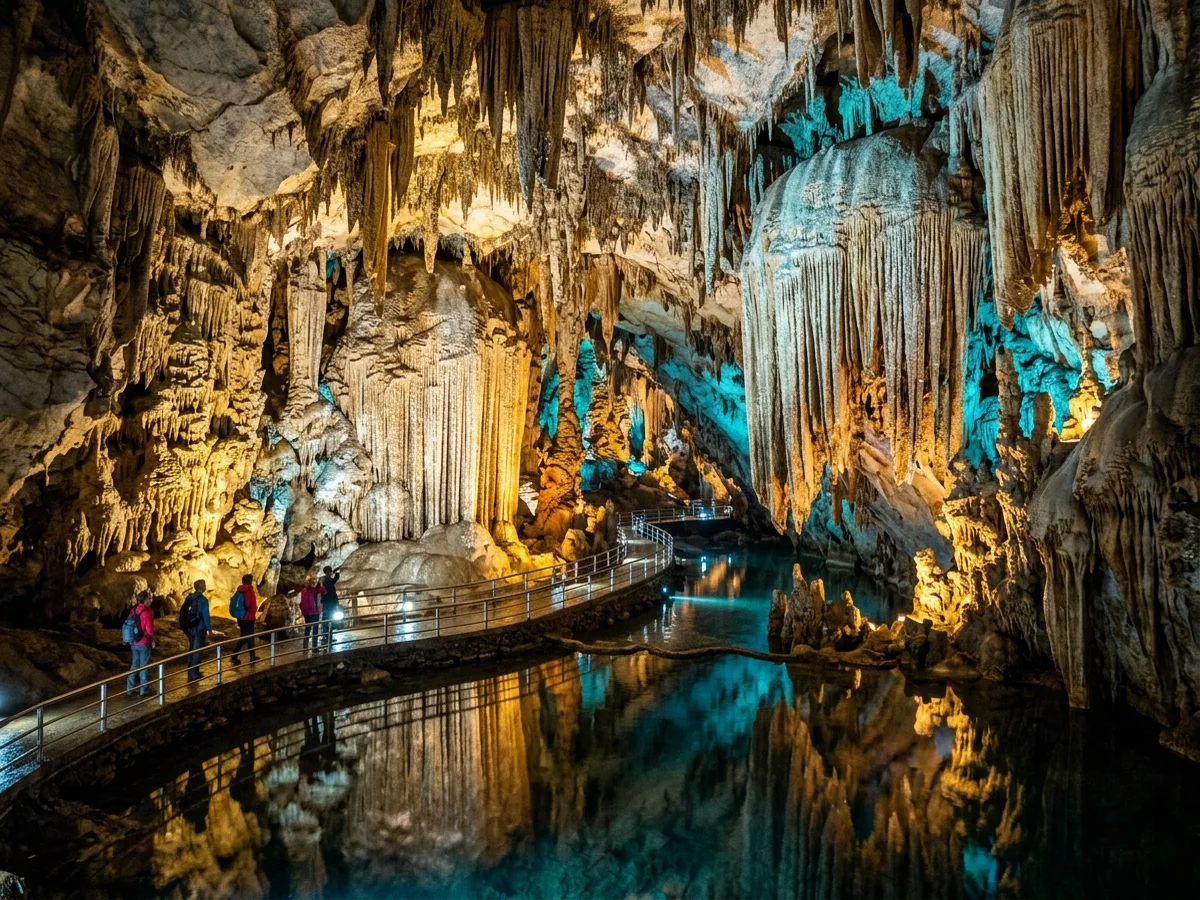
Silver Cave is Guangxi’s ultimate rainy-day trump card. When torrential monsoon downpours muddy the Yulong River and cloud out Xianggong Mountain, Silver Cave maintains a steady, dry 22°C (72°F) microclimate year-round.
However, domestic tour buses arrive in massive waves between 13:30 and 15:30 after lunch. Arrive either early in the morning (08:30–10:30 AM) or late afternoon (15:45–17:00) to explore the 2-kilometer illuminated subterranean galleries without being herded like cattle.
1. The Geological Marvel: Why Silver Cave Stands Out
Carved through 12 karst mountain peaks over millions of years, Silver Cave is a typical multi-story karst cavern spanning three distinct geological tiers. Its name derives from the extraordinary purity of the calcium carbonate stalactites, which contain trace quartz minerals that sparkle like liquid silver under specialized illumination.
Local folk wisdom coined the widely quoted saying: “游了银子岩,一世不缺钱” (“He who walks through Silver Cave will never lack wealth in his lifetime”).
The Three Incomparable Wonders (三绝)
- The Flying Waterfall of the Snow Mountain (雪山飞瀑): A sheer, cascading curtain of white calcite crystals stretching over 20 meters down the cave wall, shimmering like an Arctic glacier frozen in stone.
- The Music Stone Screen (音乐石屏): A delicate row of paper-thin stalactite sheets formed over 200,000 years. Different sections resonate with distinct musical pitches when gently struck.
- The Pearl-adorned Umbrella (广寒深宫·混元珍珠伞): A freak of cave geology—a 1.5-meter stalagmite shaped like an open parasol with a thick central spire and a bulbous, jewel-encrusted canopy that defies standard gravitational dripstone physics.
2. Navigating the Route & Dodging Tourist Friction
The interior tour follows a strictly one-way elevated concrete walkway with secure stainless steel railings. The path gently ascends through a sequence of towering chambers before looping back along a lower gallery.
| Stage | Distance / Time | Highlights & Photography Tips |
|---|---|---|
| Lower Level (Underworld Cave) | ~400m · 20 mins | Narrow corridors, subterranean streams, eerie green-blue illuminated pools |
| Grand Hall (Upper Gallery) | ~1,100m · 50 mins | 40-meter cavern ceilings, Snow Mountain Waterfall, Crystal Palace reflection pond |
| Ascent to Exit Gallery | ~500m · 25 mins | Moderate stair climb (approx. 180 steps), high-angle overlooks of the dripstone columns |
[!NOTE] Footwear Alert: Cave floors are perpetually damp from mineral condensation. Wear non-slip sneakers or trail shoes; leave sandals, smooth dress shoes, or leather-soled boots at your hotel.
3. The 500-Meter Exit Commercial Gauntlet
After exiting the cool cavern, every visitor must traverse a mandatory, winding covered shopping path through dozens of local souvenir kiosks selling dried persimmons, Lipu taro chips, silver jewelry, and wooden combs.
- Price Warning: Prices in the first 20 stalls closest to the cave exit are marked up 300% compared to Yangshuo street markets.
- Polite Navigation: If uninterested, simply smile, say “Bù yào, xièxie” (不要,谢谢 / “No thanks”), and maintain a steady pace toward the parking lot shuttle pick-up zone.
4. Transit Options from Yangshuo
Silver Cave is located in Lipu City, approximately 25 kilometers south of Yangshuo West Street. Public transit requires hopping between regional buses, making private vehicle arrangements the clear choice for international travelers.
- Option A: Dedicated Private Van / Driver (Recommended): ~$35–$45 USD for a comfortable half-day charter. Your driver handles the G321 highway transit, waits securely in the shaded parking lot with your bags, and coordinates direct pickup right at the exit gate.
- Option B: Yangshuo Tourism Shuttle Bus: Departs from Yangshuo South Bus Station (阳朔汽车南站) roughly every 40 minutes (approx. ¥20 RMB/person). Buses stop along G321 and require basic Chinese comprehension to find the return pickup point.
- Option C: Motorbike / E-Scooter: Strongly discouraged due to heavy commercial cement trucks and gravel traffic along National Highway G321 south of Gaotian.